
Why is Pythagoras considered a philosopher?

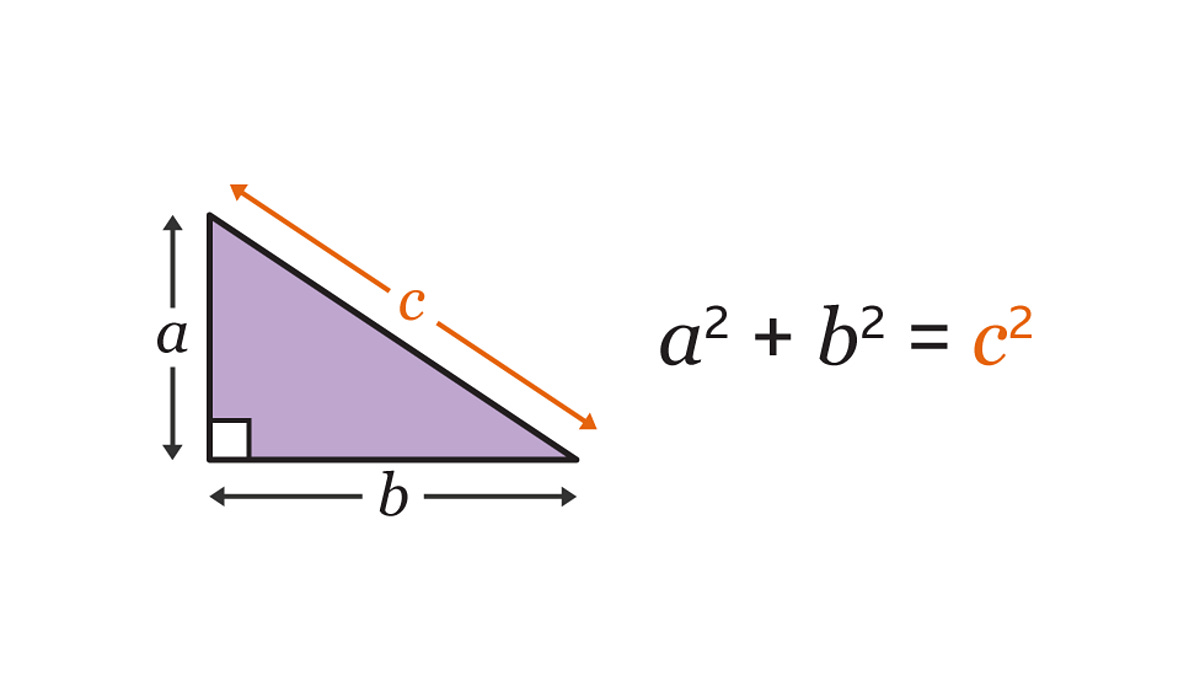
Most people have probably learned about one of the most famous philosophers from antiquity, without ever knowing that he was a philosopher. You probably came across Pythagoras some time in Jr. High. The good ol’ Pythagorean theorem, a² + b² = c². The square of the hypotenuse is equal to the sum of the squares of the other two sides in a right-angled triangle.
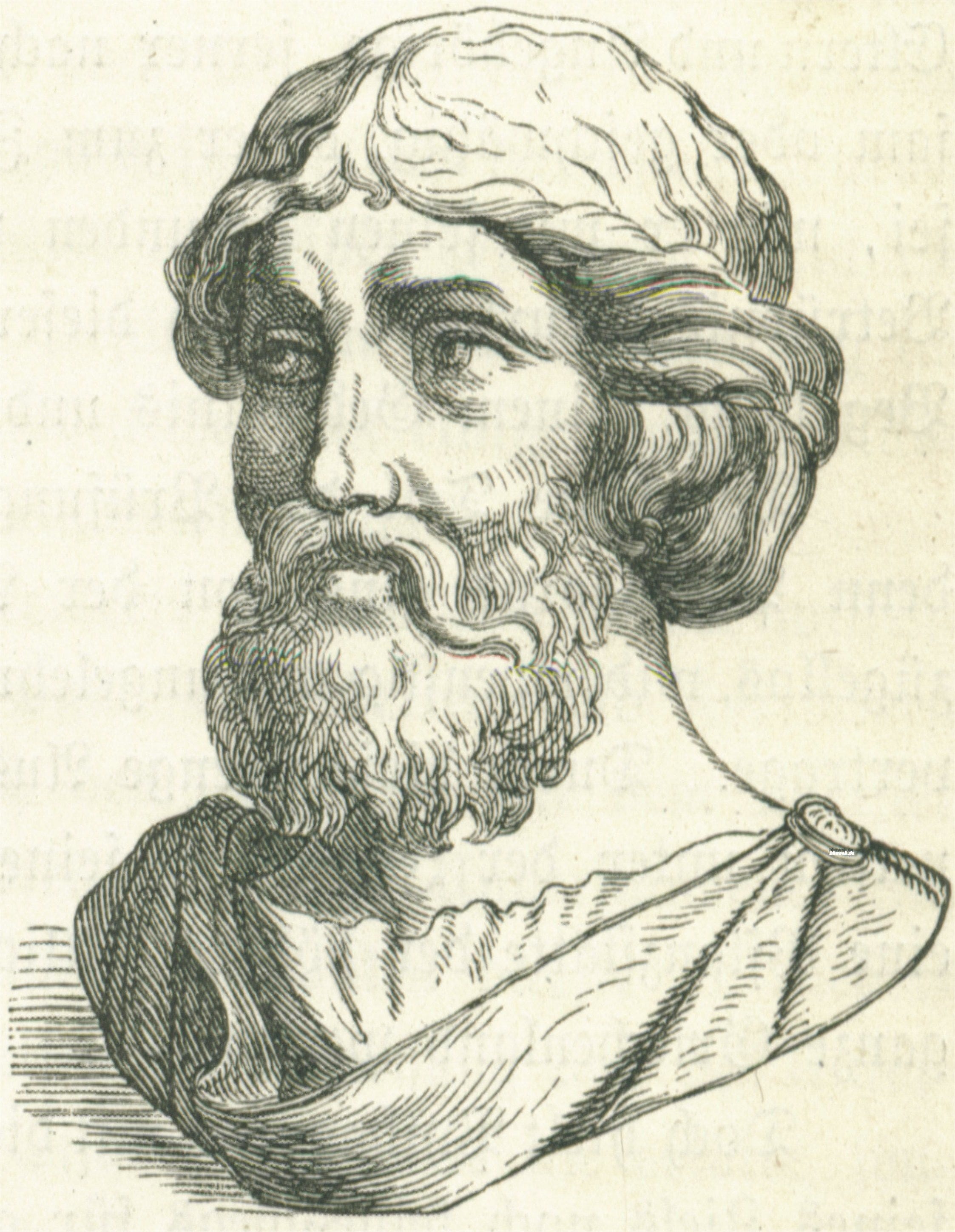
You were probably told that the theorem comes from Pythagoras. It’s even named after him. We now know that’s probably false. What you might not have been told was that he was a philosopher. So, who is Pythagoras, the guy credited for coming up with a theorem that he probably didn’t, and a philosopher who is often forgotten as a philosopher?
Pythagoras (c. 570-c. 490 B.C.E.) was from Samos, an island in Ionia. He left for Croton, in southern Italy, where he had a successful political career. In addition, he also led a religious group. His religious group was know for their asceticism, secrecy, and strange practices such as never killing white roosters or eating beans. It was with his religious activities that we start to see his philosophical legacy.
You might be skeptical at this point. I get it. Nothing screams philosophy. We got one more component to add to the equation (no pun intended). Though Pythagoras may not have come up with the famous equation, there is good reason for this attachment. Pythagoras was the most important mathematician of his age.
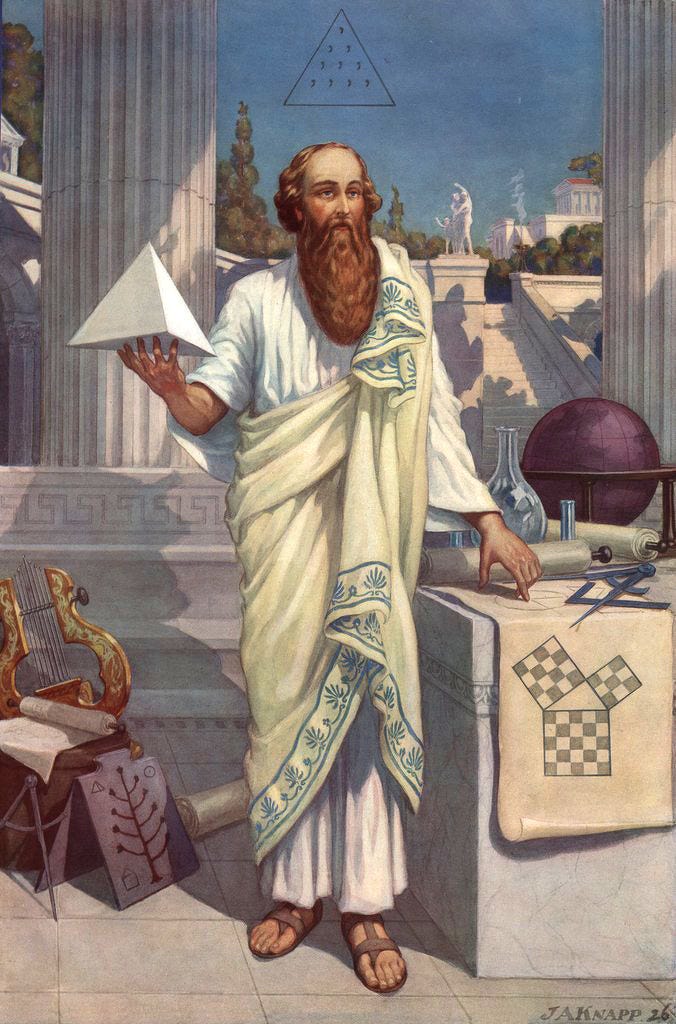
Pythagoras saw the world through numbers and the tension/harmony of how numbers interact. For instance, Pythagoras saw the musical scale as just mathematical ratios. Legend has it, Pythagoras was walking by a blacksmith. He noticed that different hammers created different pitches. After some experiments, he calculated the ratio between different weighted hammers and converted that to the ratio between different notes. For Pythagoras, notes were numerical ratios in audible form.
Combine the religious/mystical with his mathematical way of seeing the world and you get Pythagorean philosophy. For instance, Pythagoras believed in the eternity and reincarnation of souls. He once stopped someone from beating a puppy because he perceived his friend’s soul in the crying puppy. He believed that the soul is a matter of harmony, and matters of harmony are matters of numbers. As we learned, music is a matter of numbers. So, it is possible to harmonize the right type of music to the soul, in order to foster an elevation of the soul. It is simply a matter of getting the correct mathematical ordering of reality.
His ascetic practices and his ability to order the world according to numbers added to his legendary status. He was said to have a thigh of gold, a sign of divinity. He had the ability to appear in two different places at once. He had the superhuman ability to use his mind, which he used to speak to animals.
The religious and the mathematical were pillars of his love of wisdom and the pursuit of truth. The way he numbered the order of reality and related that to a cosmic divine order earned him a following that burgeoned into a philosophical school that survived long after his death. Despite never writing anything down, he is credited as the one who created the word “philosophy,” the love of wisdom.
Here are some books on Pythagoras:
Walter Burkert, Lore and Science in Ancient Pythagoreanism, E. Minar (tr.). Harvard University Press, 1972.
Charles Kahn, Pythagoras and the Pythagoreans. Hackett, 2001.
Christoph Riedweg, Pythagoras: His Life, Teaching and Influence. Cornell University Press, 2005.